
A complete roadmap to become a Python developer — even if you’re starting from scratch.
Inspired by my wife’s journey into programming, this guide offers a human-first, beginner-friendly, AI-supported approach to learning Python.
Introduction: Why Python? Why Now?
Python is no longer just a programming language.
It’s a tool for building apps, analyzing data, automating tasks — and shaping the future with AI.
My wife is a full-time mom with no formal background in tech. But when our kids started learning Scratch, she taught herself visual programming just to help them. Now, she’s taking the next step — learning Python.
She’s not alone.
Whether you’re a parent, student, freelancer, or career-changer, Python is one of the best ways to enter the world of tech. And it doesn’t take a degree to get started — just the right mindset and a good plan.
In this guide, I’ll share:
- What a Python developer really does
- The exact 12-week plan I created for my wife
- The tools, resources, and mindset to succeed
Let’s start with the basics.
What Does a Python Developer Do?
A Python developer uses the Python language to solve real problems. That could mean:
- Building websites and web apps (with Flask or Django)
- Automating routine tasks (with scripts or bots)
- Analyzing and visualizing data (with Pandas or Matplotlib)
- Creating machine learning models (with Scikit-learn or TensorFlow)
- Working with APIs and cloud platforms
Python developers are versatile. They may specialize in web development, data science, automation, or backend systems — but they all start with the same fundamentals.
So how do you become one?
How to Become a Python Developer (My 12-Week Plan)
When my wife decided to learn Python, I didn’t just hand her a course.
I built a roadmap that balances:
- Hands-on practice
- Real-world projects
- Modern tools (like ChatGPT)
- Daily progress with zero overwhelm
Here’s the full breakdown:
Phase 1 (Week 1–3): Learn the Fundamentals of Python
Goal: Build logical thinking + basic syntax mastery
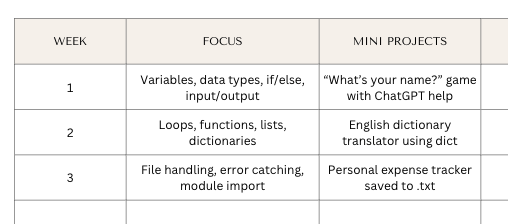
Tools:
- Replit (no installation)
- Udemy Course: 100 Days of Code by Dr. Angela Yu
- ChatGPT or Copilot for debugging & idea prompts
Phase 2 (Week 4–6): Work on Real-World Projects
Goal: Solve problems independently, start thinking like a dev
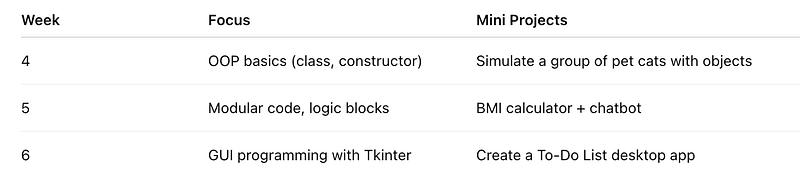
Why this matters:
Building projects early helps boost motivation and shows you where your gaps are.
Phase 3 (Week 7–9): Web Development + Data Skills
Goal: Learn the tools behind modern websites and data apps
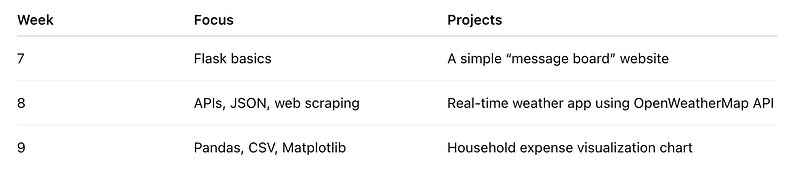
Bonus tip:
This is a good stage to learn Git + GitHub for version control and portfolio building.
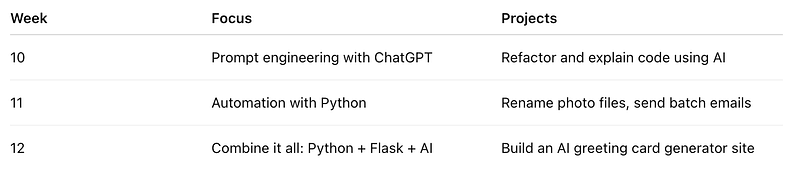
Phase 4 (Week 10–12): Use AI + Build Smarter Projects
Goal: Use Python like a real developer in 2025 — smart, efficient, and AI-assisted
Mindset shift:
Once you use Python to build things you actually want to use, you’ve made it.
Tools & Resources That Make Learning Easier
Courses
- 100 Days of Code (Angela Yu) — fun, project-based
- W3Schools—for quick syntax checks
- Real Python—to go deeper when you’re curious
- Python Docs — free documentation
Book Worth Owning
- Python Crash Course by Eric Matthes
Clear, practical, beginner-friendly. That’s it.
Coding Tools
- Replit (online playground)
- VS Code (when ready to go pro)
AI Helpers
- ChatGPT: ask “why is this code broken?”
- GitHub Copilot / Cursor IDE: generate boilerplate code
Portfolio Tip
Host all your projects on GitHub. Write clear README files. It’s your resume in code.
Can You Get a Job After 12 Weeks?
It depends on your background, focus, and practice — but after this plan, you’ll:
- Be able to build web apps and scripts on your own
- Understand how to read, write, and debug Python confidently
- Have a real portfolio of projects to show employers or clients
If you keep building and learning, you’ll be on track for roles like:
- Junior Python Developer
- Data Analyst (entry level)
- Backend Intern
- Freelance automation assistant
Final Thoughts (From a Husband + Developer)
I didn’t write this guide just to teach my wife.
I wrote it because I know a lot of people like her — curious, motivated, but unsure where to start.
The truth is:
You don’t need to be great to start.
But you have to start to become great.
If she can do it with 1–2 hours a day, between school pickups and laundry — so can you.
Python is not just a skill.
It’s a superpower for the future.
And you don’t have to walk the journey alone.
Quick Project Ideas to Practice
You don’t need big projects — just ones that feel useful or fun.
Here are a few we liked:
- To-Do App (with Flask)
- Number Guessing Game
- Budget Tracker (with CSVs + Pandas)
- Telegram Bot (daily quotes or reminders)
Rule of thumb: If it solves a real problem in your life, it’s a good project.
Let’s Learn Together
Save this guide. Share it with a friend. Or even better — learn together.
I’ll be documenting our progress as we go.
If you want updates, examples, or to follow the journey — stick around.
And if you’re already learning Python, comment below:
What’s your biggest struggle so far?